
Digital concierge vs hotel chatbot: why a text box is not the answer
Most hotels that tried a chatbot switched it off. The problem was rarely the AI. It was the format. This guide compares the two approaches on the things that decide whether guests use them: resolution rate visual answers maintenance and revenue.
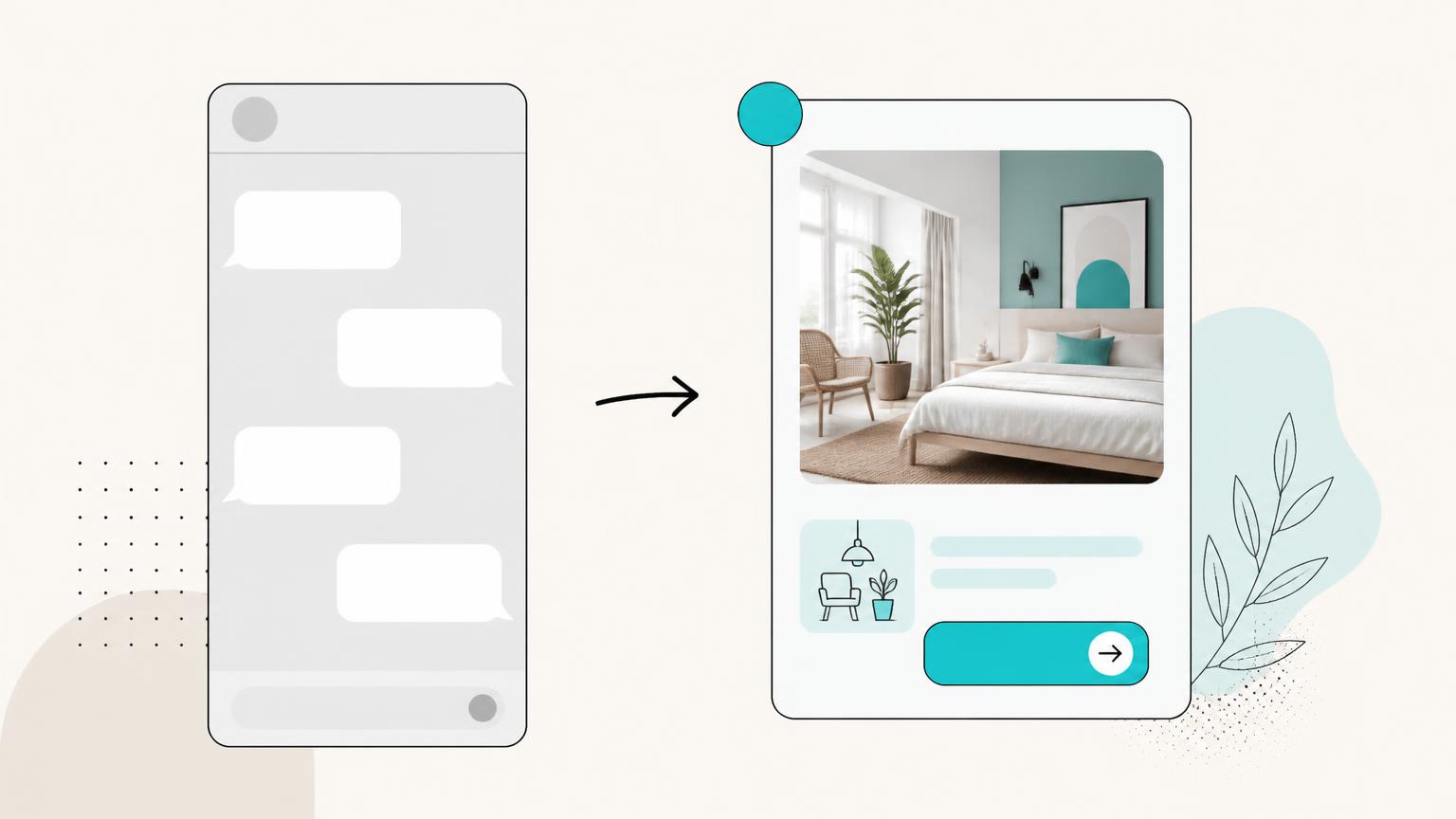
Why the first generation of hotel chatbots failed
The early hotel chatbot was a text box with a decision tree behind it. It answered the questions someone had written down and deflected everything else. Guests learned within two messages whether it was worth using. Mostly it was not.
Three failure modes repeated across properties. Content went stale because updating it was a manual job. Answers were text-only when the question was visual. There was no clean handover when the bot got stuck.
The comparison that matters
Feature lists do not separate these products. Four measures do.
- Resolution: what share of guest questions end without a human a phone call or an abandoned session.
- Format: a guest asking about a sea-view room wants to see it. Text describes. A visual answer sells.
- Maintenance: a scripted bot needs someone rewriting content. A concierge that reads live systems does not.
- Revenue: can it move from an answer to a booking an upgrade a table or a treatment inside the same conversation?
Where a visual answer changes the outcome
Hotel questions are mostly visual questions in disguise. Which room. Which table. Which suite. Which spa treatment. What the walk to the beach actually looks like. A paragraph makes the guest do the imagining and imagining is where a booking stalls.
Showing the room the offer and the price in the conversation removes that step. The guest is deciding rather than translating.
The multilingual gap
A scripted bot usually needs a separate content set per language. Most hotels ship one or two and leave the rest. A guest who asks in German Spanish or Arabic then gets a worse experience than an English-speaking guest at the same property.
An agent that reads structured content answers in the guest's own language without a parallel setup per language. That is what makes multilingual coverage realistic rather than aspirational.
How to run a fair evaluation
Give both options the same test. Ten real guest questions from your inbox. Include two awkward ones. Ask them on a phone. Ask two in a language your team does not speak. Then look at what a guest could actually do at the end of each answer.
Frequently asked
Is a hotel chatbot ever the right choice?
For a single narrow job such as routing a question to the right inbox or confirming opening hours a simple chatbot is enough. It stops being the right choice as soon as the answer should show a room or offer. It also stops being the right choice once it should lead to a booking or upsell.
What resolution rate should a hotel expect?
Ask any vendor for their own number and how they define it. Definitions vary. The more useful test is your own: ten real questions from your inbox including the awkward ones. Check what a guest can do at the end of each answer.
Does a visual agent work on mobile and in-room?
It should. Most guest questions arrive on a phone either from your website or from an in-room QR code. The visual answer has to be designed for a phone screen first rather than a desktop widget shrunk down.
Does replacing a chatbot mean rebuilding the website?
No. Xbrandify sits alongside your existing website PMS and booking engine. Nothing is migrated or replaced. The agent reads your live content and links into the booking flow you already run.
See it with your business
A demo runs on your rooms your offers and your booking engine. You can judge it on your own content rather than a generic script.
Book a demo